BELLE ÈPOQUE CARIOCA - When Rio Wanted to be Paris
Museu de Arte do Rio
Sunday, November 29 · 10h · From R$34
- when
- where
- Museu de Arte do Rio
Praça Mauá, 5 - Saúde, Rio de Janeiro - RJ, 20081-240
directions ↗ - price
- From R$34
Original description
Automatically translated
READ THE EVENT DESCRIPTION AND NOTES
Ticket Price: R$ 30.00. Get your ticket via the link in my Instagram Bio 1.
If you purchase a ticket and cannot attend the event, please contact us to reschedule.
If the ticket is not available for purchase, please contact us
Contacts: 21993910147 (preferred contact via WhatsApp)
@alexandre.guiadeturismo ((Instagram))
GUIDED IN PORTUGUESE.
About the Historical Walk
People working or living in downtown Rio de Janeiro have noticed that the street population has increased post-pandemic. They have also noticed the actions of governments (municipal, state, and federal) to revitalize the area's commerce and real estate developments in the region.
Believe it or not, discussing space occupation in Downtown and government actions aimed at increasing profits from the neighborhood's tourist vocation and urban reforms designed to push away the undesirable elements and attract tourists and the desired resident profile to the area is not new. Exactly 135 years ago, the plans and proposals for Downtown took shape in the Belle Èpoque Carioca.
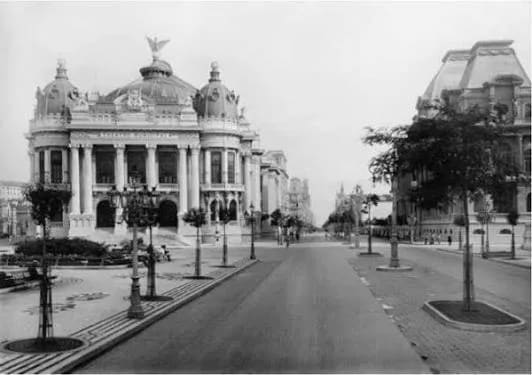
The Belle Époque began in France, between 1871 and 1880, and was replicated worldwide. Here, the movement started in 1889, the year of the proclamation of the Republic, and lasted until the Modern Art Week (1922). It was a period of cosmopolitan culture that brought significant changes to Arts, Culture, Technology, and National Politics, reducing what was considered Brazil's backwardness compared to European countries at the time. The Brazilian Belle Époque had its own aspects. It lasted longer and promoted greater technological advancement, especially in Architecture and Urbanism. The movement was implemented in the country's richest regions, such as the rubber hub (Amazonas and Pará), the coffee zone (São Paulo and Minas Gerais), and the largest Brazilian cities at the time (Recife, Rio de Janeiro, and Salvador).
The Carioca Belle Époque modernized the city of Rio de Janeiro. It was a complex and multifaceted process that transformed the city into a modern and cosmopolitan urban center. But this modernization came at a cost beyond the money spent on construction. The movement impacted social and cultural aspects of the city, and these impacts are felt today. Knowing this historical period in its contexts and approaches is essential to understanding how the city of Rio de Janeiro became a modern metropolis and to understand its current challenges.
You are invited to this historical immersion walk where we will discover the Carioca Belle Époque beyond the European-inspired buildings and the widened streets and wide avenues. We will understand what the city was like before and how the people received the changes and their social consequences. Invite your friends and come with us.
#BELLEÈPOQUE #RIOANTIGO #HISTÓRIA #CAMINHADAHISTÓRICA #PEREIRAPASSOS #BOTAABAIXO #WALKINGTOUR #TURISMO #RIODEJANEIRO